原文摘要
The third Qwen model release week, following Qwen3-235B-A22B-Instruct-2507 on Monday 21st and Qwen3-Coder-480B-A35B-Instruct on Tuesday 22nd.
Those two were both non-reasoning models - a change from the previous models in the Qwen 3 family which combined reasoning and non-reasoning in the same model, controlled by /think and /no_think tokens.
Today's model, Qwen3-235B-A22B-Thinking-2507 (also released as an FP8 variant), is their new thinking variant.
Qwen claim "state-of-the-art results among open-source thinking models" and have increased the context length to 262,144 tokens - a big jump from April's Qwen3-235B-A22B which was "32,768 natively and 131,072 tokens with YaRN".
Their own published benchmarks show comparable scores to DeepSeek-R1-0528, OpenAI's o3 and o4-mini, Gemini 2.5 Pro and Claude Opus 4 in thinking mode.
The new model is already available via OpenRouter.
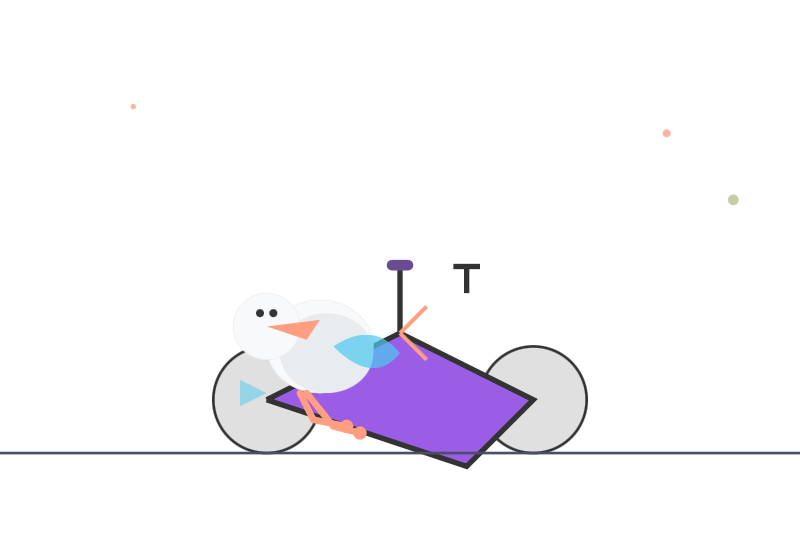
But how good is its pelican?
I tried it with "Generate an SVG of a pelican riding a bicycle" via OpenRouter, and it thought for 166 seconds - nearly three minutes! I have never seen a model think for that long. No wonder the documentation includes the following:
However, since the model may require longer token sequences for reasoning, we strongly recommend using a context length greater than 131,072 when possible.
Here's a copy of that thinking trace. It was really fun to scan through:
![Qwen3 235B A22B Thinking 2507 Seat at (200,200). The pelican's body will be: - The main body: a rounded shape starting at (200,200) and going to about (250, 250) [but note: the pelican is sitting, so the body might be more upright?] - Head: at (200, 180) [above the seat] and the beak extending forward to (280, 180) or so. We'll design the pelican as: - Head: a circle at (180, 170) with radius 15. - Beak: a long triangle from (180,170) to (250,170) and then down to (250,180) and back? Actually, the beak is a long flat-bottomed triangle.](https://static.simonwillison.net/static/2025/qwen-details.jpg)
The finished pelican? Not so great! I like the beak though:
Via @Alibaba_Qwen
Tags: ai, generative-ai, llms, qwen, pelican-riding-a-bicycle, llm-reasoning, llm-release
[原文链接](https://simonwillison.net/2025/Jul/25/qwen3-235b-a22b-thinking-2507/#atom-everything)